
History of Blackwater National Wildlife Refuge
Blackwater National Wildlife Refuge (NWR) was established in 1933 as a refuge for migratory birds and is fed by the Blackwater River and the Little Blackwater River. The name "blackwater" comes from the tea-colored waters of the local rivers, which are darkened by the tannin that is picked up as the water drains through peat soil in the marshes.
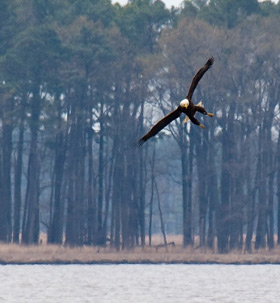
In addition to a wealth of wetlands, Blackwater is also home to over 250 bird species as well as three species that have spent time on the Endangered Species List but are now recovered: the Delmarva fox squirrel, the peregrine falcon, and the American bald eagle.
Before becoming a refuge, the local land was once managed as a fur farm, and muskrat and nutria (a non-native species introduced from South America) have been trapped at the Refuge. Just recently, nutria was deliberately eliminated from the Refuge property due to its destructive overeating of the wetlands' plants. In addition to trapping, the land at Blackwater also shows signs of past timbering and farming.
Other forms of human history have also played an important role in the region where Blackwater NWR resides. Nause and Waiwash were the names of two Nanticoke Indian ancestral villages that were based in Dorchester County, Maryland—the home of Blackwater NWR. The Nause-Waiwash Indian tribe now consists of over 250 descendants of the original Nanticoke Indians from the Eastern Shore of Maryland. The tribe has restored their Longhouse at the corner of Maple Dam Road and Greenbriar Road, half a mile from the Refuge, which is adjacent to Fishing Bay Wildlife Management Area. In Fishing Bay are Guinea and Chance islands, the ancestral home of the Nause-Waiwash Indian tribe who still make annual visits there.
Also, the region is steeped in Civil War and civil rights history. Blackwater NWR is believed to be a former hiding place for escaped slaves who were traveling on the Underground Railroad. Blackwater NWR is now within the Harriet Tubman Underground Railroad National Monument. Tubman spent her childhood as a slave working on farms that abut or are included within the boundary of the Refuge. As a young adult she worked as a timber laborer on the north side of the Blackwater River and checked muskrat traps along the Little Blackwater River.
Credit: Bob Quinn