Projects at Blackwater National Wildlife Refuge
As part of our support for Blackwater National Wildlife Refuge (NWR), the Friends of Blackwater regularly fund and volunteer for various projects around the Refuge. Currently the Friends of Blackwater maintain the Osprey Cam and the Eagle Cam, staff annual events like the Eagle Festival and the Youth Fishing Fun Day, maintain the Native Butterfly and Beneficial Insect Garden, and help maintain the land trails and paddling trails.
Below is a list of some of our bigger projects.
Chronolog Photo Station
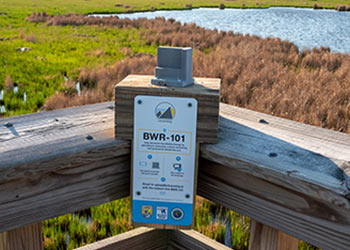
The Friends of BWR have partnered with the Chronolog Citizen Science Project, an environmental monitoring website, to install a Chronolog photo station at the Observation Platform along the Refuge Wildlife Drive. Visitors can place their smartphone in the photo station to capture an image of the marsh and then email it to the Chronolog website, which stitches the photos together to create a crowdsourced, time-lapsed video illustrating changes to the marsh over time. The station is near the confluence of the Little Blackwater River and the Blackwater River, tributaries of the Chesapeake Bay. This location provides views of tidal marshes, forests, and shallow open water. The Refuge is impacted by sea level rise, which can drown tidal marshes and convert them to open water, as well as flood adjacent forests, kill trees, and create new tidal marshes. The Chronolog station engages visitors by allowing them to contribute their photos and witness how the ecosystem is changing over time.
Environmental Education Building
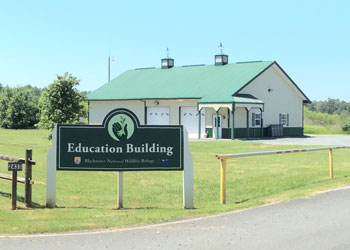
The Environmental Education building was funded in part by a grant acquired by the Friends of Blackwater from the Maryland Heritage Areas Authority, and since 2007, the building has offered a venue for numerous workshops and programs for elementary and middle school students and teachers from Dorchester County. Refuge staff, volunteers, and other partners, such as the Baltimore Aquarium, collaborate to facilitate teacher-led interactive, hands-on activities in the field. These have included marsh walks, Wildlife Drive and Visitor Center tours, native and invasive plant identification, tree and native grass plantings, and geolocation using GPS. Teachers also participate in environmental education and science workshops for their own professional development. Visit the For Educators page on the U.S. Fish and Wildlife Service Blackwater NWR website to learn more about educational opportunities at the Refuge.
Visitor Center Renovation
The Friends of Blackwater acquired funding through grants and donations to help renovate the Blackwater NWR Visitor Center—renovations that included an observatory and natural history library on a new second floor in the building.
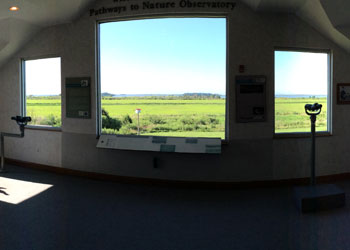
The second floor now contains a set of TV monitors for the Osprey Cam and Eagle Cam, as well as bird exhibits and a birdwatcher's observatory where visitors can use spotting scopes to view the Osprey Cam platform, the Blackwater River, and the marsh. This observatory is called the "Wild Birds Unlimited Pathways to Nature Observatory" and was made possible by a grant from the Pathways to Nature conservation fund, which is a partnership between Wild Birds Unlimited stores and the National Fish and Wildlife Foundation.
Access to the second floor is via a staircase, as well as a small wheelchair-friendly elevator.
Birding and Natural History Library
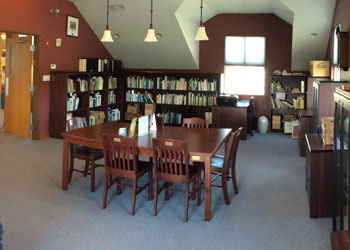
On the second floor of the Blackwater NWR Visitor Center, the Friends of Blackwater maintain a Birding and Natural History Library where visitors can browse books about local and worldwide wildlife, naturalists, nature artists, and the National Wildlife Refuge System. The family of Richard C. Kleen, a long-time volunteer at Blackwater NWR who traveled to many states and countries to add to his U.S. birding life list and his world life list, donated the first 450 books to the library in his memory. This collection is housed in locked cabinets in the library and can be viewed by appointment. Volunteers from the Friends of Blackwater process all new donations and use a computer program to log and catalog all the books. See our Visitor Center page to learn more about the library and its holdings.
Wild Goose Chase Cycling Event
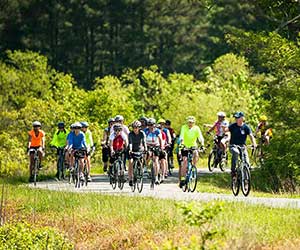
Women bicyclists from all over the Mid-Atlantic and beyond annually converge on Dorchester County to ride in the Wild Goose Chase cycling event. Initiated by Georgena Terry in 2008, the Wild Goose Chase has raised over $160,000 for the Friends of Blackwater. The event attracts several hundred cyclists each year, and is organized and run entirely by Friends of Blackwater volunteers. Volunteers create promotional materials and generate publicity; solicit bike industry sponsors and exhibitors from all over the country; order T-shirts, tables, tents, portapots, food, and supplies; update and print maps and cue sheets for the riders; and create a Local Business Directory handout for registrants, who are encouraged to enjoy the local community amenities with their companions. Volunteers also sit at the registration desks and check in riders, as well as handle all the logistics and supplies for the rest stops, lunch, and reception. All revenue, after covering expenses, helps the Friends of Blackwater support various Refuge projects. Visit our Wild Goose Chase page to learn more about the event.
Blackwater NWR Paddling Trails
To encourage exploration and appreciation of the tidal wetlands and the diverse wildlife along the Blackwater River, three paddling trails covering approximately 25 miles were established in 2003. Two put-ins or launch sites provide access to the river and parking facilities. The Friends of Blackwater recently applied for and received a grant from the Maryland Heritage Area Authority to install kiosks and update signage along the trails. The kiosks will contain interpretative panels with updated maps and safety information, making the river access points more visible and increasing public use of the water trails. Signage will be replaced and/or newly installed as needed at various points along the trails to guide paddlers. In addition to improving the water trails, this project enhances Maryland heritage resources along the Harriet Tubman Underground Railroad and Chesapeake Country Scenic Drive Byways, supporting tourism and economic development in the local and regional communities. The project is expected to be completed in 2017. Learn more about the paddling trails on the U.S. Fish and Wildlife Service Blackwater NWR website.